Kopš meteorītikas zinātnes dzimšanas pagājuši 232 gadi. Pirmais zināmais meteorīts Latvijas teritorijā nokrita pirms 206 gadiem. Otrais zināmais meteorīts Latvijas teritorijā nokrita pirms 163 gadiem. Trešais zināmais meteorīts Latvijas teritorijā nokrita pirms 162 gadiem. Pēdējais zināmais meteorīts Latvijas teritorijā nokrita pirms 136 gadiem. Pirmais meteorītikai veltītais muzejs Latvijā dibināts pirms 11 gadiem.
Meteoriti.LV vietne tiks pakāpeniski papildināta ar plašu pamatinformāciju par meteorītiku un ar to saistitām astronomijas nozarēm.
Uzzināsiet, vai "meteorīti dabā sastopami retāk par dimantiem", cik tie ir veci un kāda ir to izcelsme.
Atradīsiet atbildes uz jautājumiem:
Vai meteorīti ir bīstami?
Kādi meteorīti atrodami Latvijā un kur tos var apskatīt? Vai Latvijā ir vērts meklēt meteorītus?
Ko meteorītu izpēte pastāsta mums par Zemes un Saules sistēmas izcelšanos?
Ceram, ka tas radīs vēlmi arī jums pašiem novērot Zemes kosmiskos viesus - meteorus, un, varbūt, pat kļūt par īstiem meteorītu medniekiem!
Veiksmīgu novērošanu!
2023. gada marta beigās Meteorītu muzejā tika uzstādīta gaismas piesārņojuma mērīšanas iekārta SQM-LE, ar kuru diennakts tumšajā laikā tiek veikti nepārtraukti debess kvalitātes mērījumi urbānā teritorijā Rīgā.
Reāllaika dati: 01:07 UTC+3 SQM= -- (debesis ir pārāk gaišas)
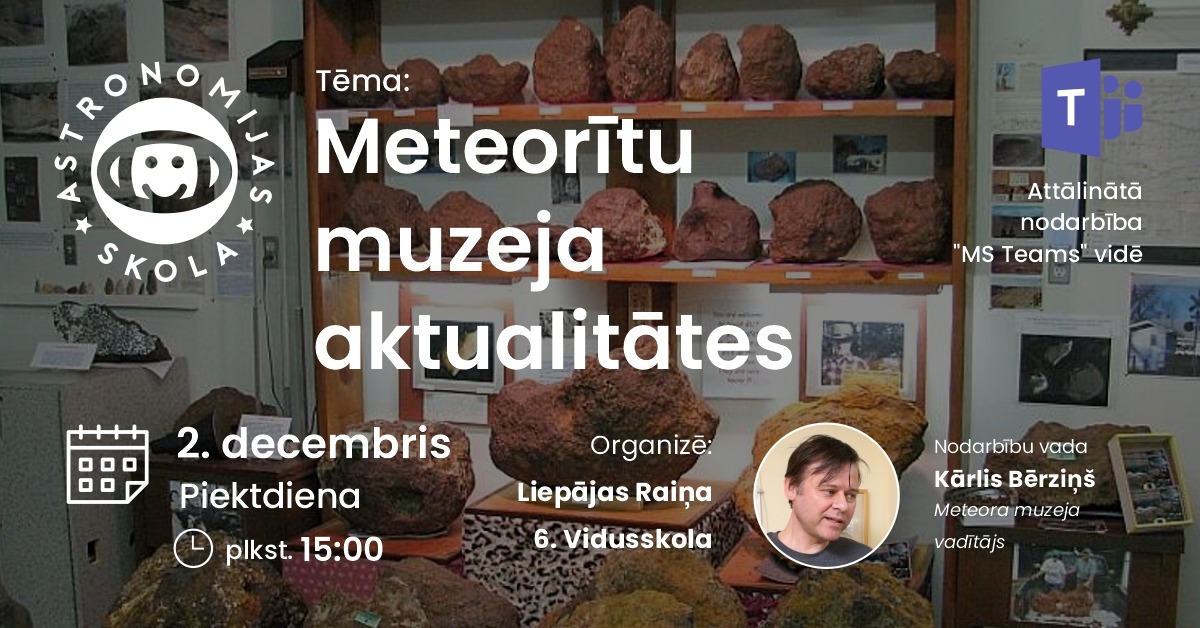
Tiešsaistes lekcija 2023. g. 31. martā plkst. 16:00
Anotācija: Pirms 66 miljons gadiem ar Zemi sadūrās asteroīds, kā rezultātā izmira apmēram 3/4 tā laika dzīvības. 1908. gadā notika Tunguskas katastrofa, kurā tika iznīcināts mežs 2000 km2 platībā. 2013. gadā neprognozēti notika Čeļabinskas meteorīta krišana. Netieši no tā sprādziena viļņa ievainojumus guva vairāk nekā 1,5 tūkstoši cilvēku. Ko esam mācījušies no šiem notikumiem? Vai ir pamats satraukties par Saules sistēmas mazo ķermeņu izraisītu Zemes "pastardienu"? Kā pasargāt Zemi no asteroīdu draudiem?
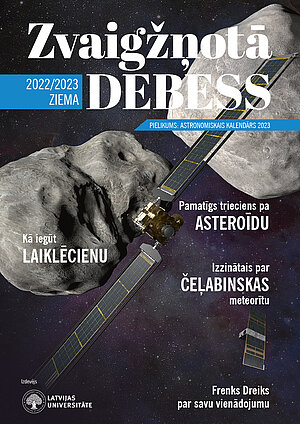
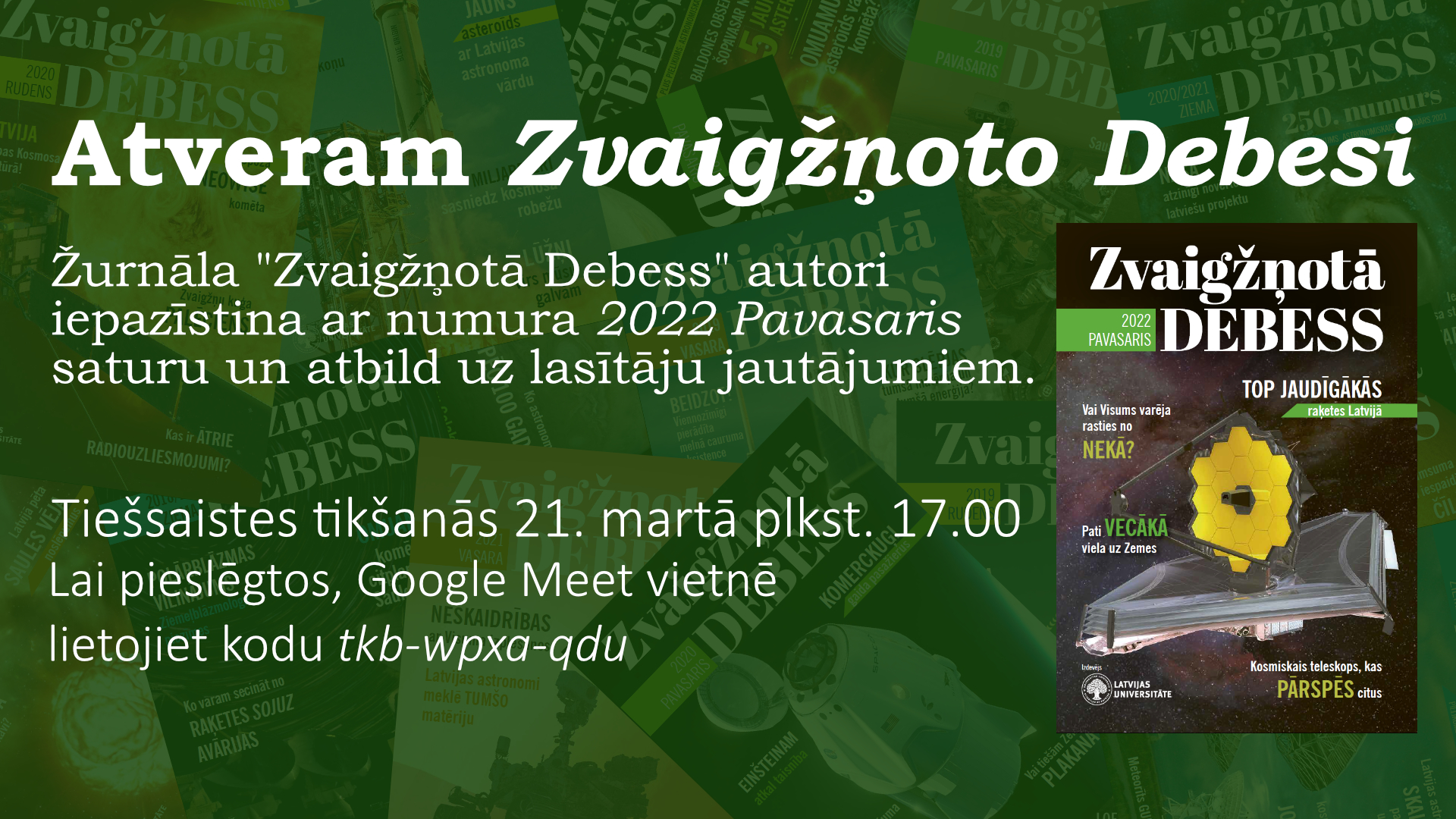
Nepalaid garām! Žurnāls "Zvaigžņotā Debess" aicina uz 2022/2023 ziemas numura atvēršanu 2022. gada 15. decembrī plkst. 17:00
2022-12-15(Pēdējās izmaiņas: 2022-12-30)
Nepalaid garām iespēju tiešsaistē tikties ar žurnāla "Zvaigžņotā Debess" veidotājiem un autoriem! Jaunākajā žurnāla "Zvaigžņotā Debess" numurā lasiet arī mūsu sagatavoto rakstu par īpašo Čeļabinskas meteorītu, kura fragmenti klātienē apskatāmi Rīgā Meteorītu muzejā.
Sakarā ar Lielbritānijas Dabas un vēstures muzeja meteorītu publiskā kataloga reorganizāciju, šobrīd tā tiešās meteorītu saites ir izmainītas un nedarbojas.
Tehniska informācija
2022-07-15
Atvainojamies, šobrīd tehnisku problēmu dēļ pārtraucam meteorītu sertifikātu izsniegšanu, līdz brīdim, kad tiks atrisināta to verifikācijas problēma!
(vietu skaits ierobežots!) Nepieciešama iepriekšēja elektroniska reģistrācija ar bezmaksas ieejas kartes saņemšanu. Pasākums tiek organizēts PAR ZIEDOJUMIEM.
Nepalaid garām! Žurnāls "Zvaigžņotā Debess" aicina uz vasaras numura atvēršanu 2022. gada 16. jūnijā pl. 17:00
Nepalaid garām īpašo Meteorītu muzeja pasākumu! 50. gadadiena Apollo 16 misijai un vēsturiskā Latvijas karoga lidojumam uz Mēnesi sestdien, 2022. gada 23. aprīlī pl. 14:00 - 21:00
2022-04-20
Par ziedojumiem būs iespēja apskatīt Meteorītu muzeja fondus, aplūkot tuvplānā vairākus Mēness meteorītu fragmentus.
18:30 - Ievads Piedalās: brīvības cīnītājs Jānis Rožkalns, Triju Zvaigžņu ordeņa lielvirsnieks; Latvijas Republikas vēstniecības ASV pārstāve Anna Stepanova u.c.
19:00-19:40 Dr Annie Platoff "Flags of the Apollo Program" (lekcija angļu valodā no ASV)
19:40-20:15 Raitis Misa "Uz priekšu, uz Marsu! /F. Canders/ – Bet vispirms uz Mēnesi!" (populārzinātniska lekcija)
20:15-20:30 Kārlis Bērziņš "Vēsturiskā notikuma kopsavilkums"
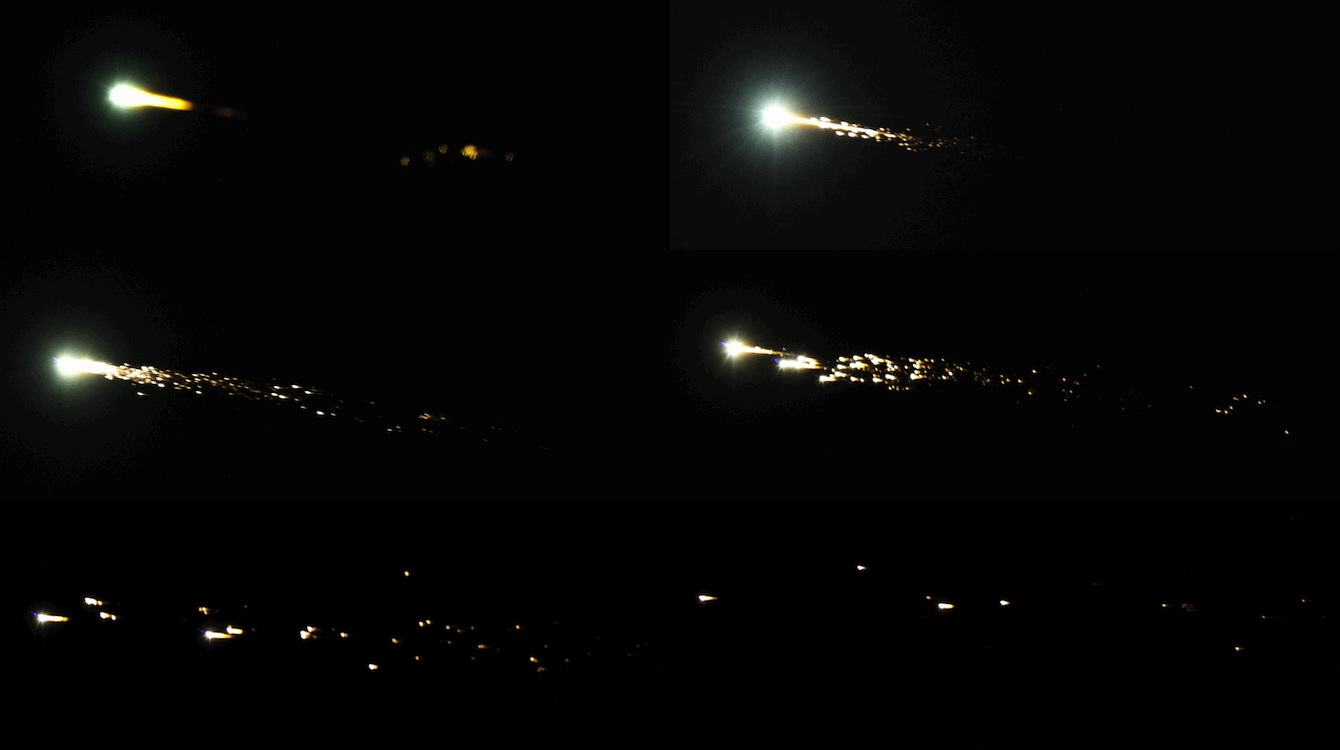
Latvijas tuvumā 2022. gada 18. janvārī ap pl. 7:35 no rīta novērots spožs bolīds. Zināms, ka bolīds novērots Igaunijā, Somijā un Dānijā. Papildinājums: tagad zināms, ka bolīds novērots arī Latvijā un Polijā. Palielinoties novērotāju sniegtajai informācijai, ir izmainījies arī objekta lidojuma trajektorijas novērtējums. Pēc visa spriežot, Baltijas jūrā, Kurzemes piekrastē, varētu būt iekritis neliels meteorīts.
Varbūt esiet notikuma aculiecinieks, varbūt variet pārbaudīt savus video reģistratorus ap 2022-01-18 07:35 (05:35 UT) ± 3 min? Lūdzu, sūtiet savu informāciju uz e-pastu: info@meteoriti.lv
Šobrīd Latvijas teritorijā apstiprināti tikai 4 meteorīti. Jau vairāk kā 130 gadus nav atklāti jauni, taču statistiskie pētījumi liecina, ka tādiem vajadzētu būt. Meteorītu muzeja laboratorijā ir radīts meteorītu identificēšanas (MID) tests, kas pat nespeciālistiem mājas apstākļos ļaus atsijāt nemeteorītus no pozitīviem meteorītu kandidātiem.
Cerot uz sabiedrības atbalstu, Meteorītu muzejs organizē pilsoņu zinātnes kampaņu "Vai arī tavā pagalmā ir meteorīts?" ar aicinājumu Latvijas iedzīvotājiem pievērst uzmanību savai apkārtnei, kļūstot par nākamo Latvijas meteorītu atklāšanas līdzdalībnieku.
Tiešsaistes pasākums notiks angļu val. 2021. gada 18. februārī pl. 17:00-18:00 iDialogue platformā (nepieciešama iepriekšēja reģistrācija) Lai pievienotos Meteorītu muzeja iDialogue klasei, lietojiet kodu: RdpqpY
Atbilstoši valstī izsludinātajam Covid-19 ārkārtas stāvoklim no 21. decembra visu muzeju iekštelpas uz laiku tiks slēgtas, apmeklētāji netiks pieņemti! Atvainojiet, attiecīgi arī visi š.g. nogalē izsludinātie Meteorītu muzeja pasākumi tiek atcelti! Lūdzu, sekojiet aktuālai informācijai!
Ievērojiet! Šobrīd, atbilstoši Covid-19 stāvoklim valstī, Meteorītu muzeja apmeklējums iespējams tikai ar iepriekšēju e-pierakstu tikai individuāli vai saistītām personām, vienas mājsaimniecības cilvēkiem.
Tehniska informācija
2020-11-08
Tagad Meteorītu muzeja pasākumu elektroniskā rezervācija jeb e-pieraksts pieejams vairākās valodās: latviešu , angļu un krievu valodās.
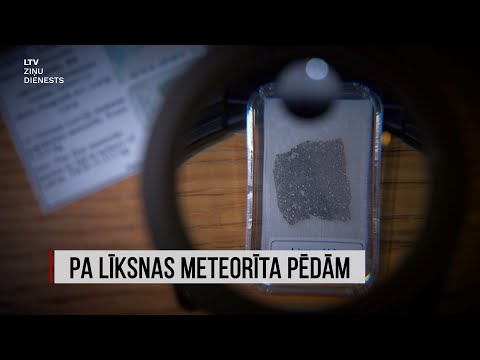
"Pirms 200 gadiem par to runāja visi – zemnieki krogos, aristokrāti salonos un zinātnieki. No debesīm krita akmeņi. Pasaulē uzzināja par Līksnas meteorītu..." Līksnas meteorīts ir pirmais zināmais Latvijas teritorijā nokritušais meteorīts, un šis ir pirmais TV raidījums, kas pilnībā veltīts šim kosmiskajam notikumam. Piedaloties vēsturniekam Henriham Somam, astrofiziķim Kārlim Bērziņam un novadpētniekam Romualdam Gadzānam, filmēšana notika Vārkavas pagastā, vietā, kur 1820. gada 12. jūlijā no skaidrām debesīm nokrita Līksnas meteorīts, un Rīgā Meteorītu muzejā, kur šobrīd glabājas vienīgais Latvijā publiski aplūkojamais Līksnas meteorīta fragments.
Tehniska informācija
2020-10-06
Meteorītu muzeja telpām pabeigti siltināšanas darbi, ēkas fasāde tagad ieguvusi jaunu dzeltenīgu nokrāsu. Atzīmējot muzeja pastvēšanas piecgadi, pilnībā atvērta otra izstādes telpa. Ierašanās muzejā tikai ar iepriekšēju pierakstu!
(vietu skaits ierobežots!) Nepieciešama iepriekšēja elektroniska reģistrācija ar bezmaksas ieejas kartes saņemšanu. Pasākums tiek organizēts PAR ZIEDOJUMIEM.
Līksnas meteorīts ir pirmais zināmais Latvijas teritorijā nokritušais meteorīts.
(vietu skaits ierobežots!) Nepieciešama iepriekšēja elektroniska reģistrācija ar bezmaksas ieejas kartes saņemšanu. Pasākums tiek organizēts PAR ZIEDOJUMIEM.
Pēc ilgstošas ārkārtas Covid-19 situācijas dīkstāves, Meteorītu muzejs apmeklētājus atkal pieņems sākot no š.g. Asteroīdu dienas, t.i. 30. jūnija. Šogad Covid-19 situācijas dēļ Rīga ir viena no nedaudzām vietām pasaulē, kur Asteroīdu dienas pasākumi tiek organizēti klātienē. Ierašanās tikai ar iepriekšēju e-pierakstu! Pasākums tiek organizēts PAR ZIEDOJUMIEM, tā ir lieliska iespēja iepazīties ar kosmosa pasaules dārgumiem un jūsu iespēju robežās atbalstīt mūsu muzeju!
Ierašanās Meteorītu muzejā iespējama tikai ar iepriekšēju laika saskaņošanu! Tagad pirms Meteorītu muzeja vizītes jāveic iepriekšēja bezmasas elektroniska reģistrācija, saņemot attiecīgajam rezervācijas laikam Ieejas karti, kas jāuzrāda muzejā. Lūdzu, jautājiet mums epastā info@meteoriti.lv vai telefoniski par citiem pieejamiem muzeja apmeklējuma laikiem (arī tiem, kas šobrīd nav izsludināti kā aktīvi!), iespēju robežās vienmēr centīsimies piedāvāt jums visizdevīgāko muzeja apmeklējuma laiku. Meteorītu muzeja pakalpojumi tiek nodrošināti atbilstoši spēkā esošajam muzeja pakalpojumu cenrādim.
Covid-19 stāvokļa informācija
2020-01-31
Atbilstoši Covid-19 stāvoklim Meteorītu muzejs uz laiku būs slēgts! Lūdzu, sekojiet aktuālai informācijai!


 '. Aicinām apmeklēt Meteteorītu muzeju, Rīgas kultūrvietu:


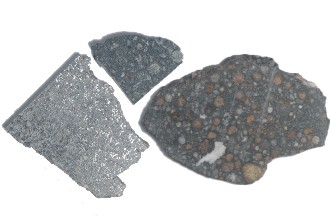
 Pārbaudiet savu atradumu tiešsasitē ar meteorītu identificēšanas testu MID.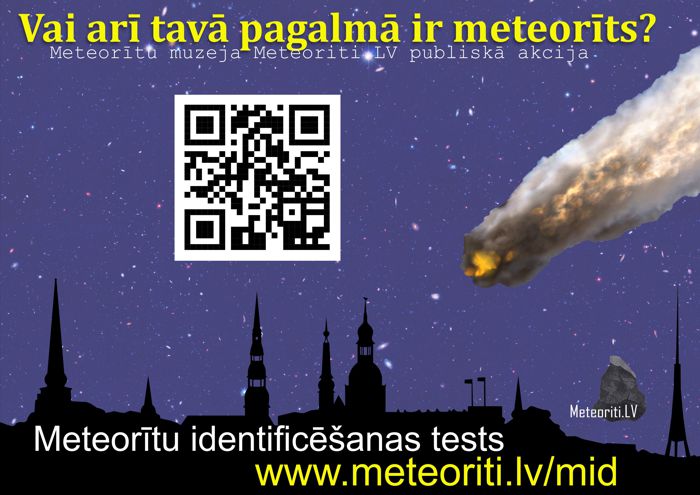
 LV:
LV: 


 Meteorītu muzeja JAUNUMI, AKTUALITĀTES un ZIŅAS
 Mūsu adrese

 Skatiet pilnu aktuālo cenrādi
 Nīcgales iela 3a, Rīga, Purvciema apkaimes centrs


 Ieskaties Latvijas Meteorītu muzejā!
  Tehniska informācija
 Tiešsaistes lekcija 2023. g. 31. martā plkst. 16:00




 Meteoriti.LV bibliotēkas papildinājums

 Īpašais pasākums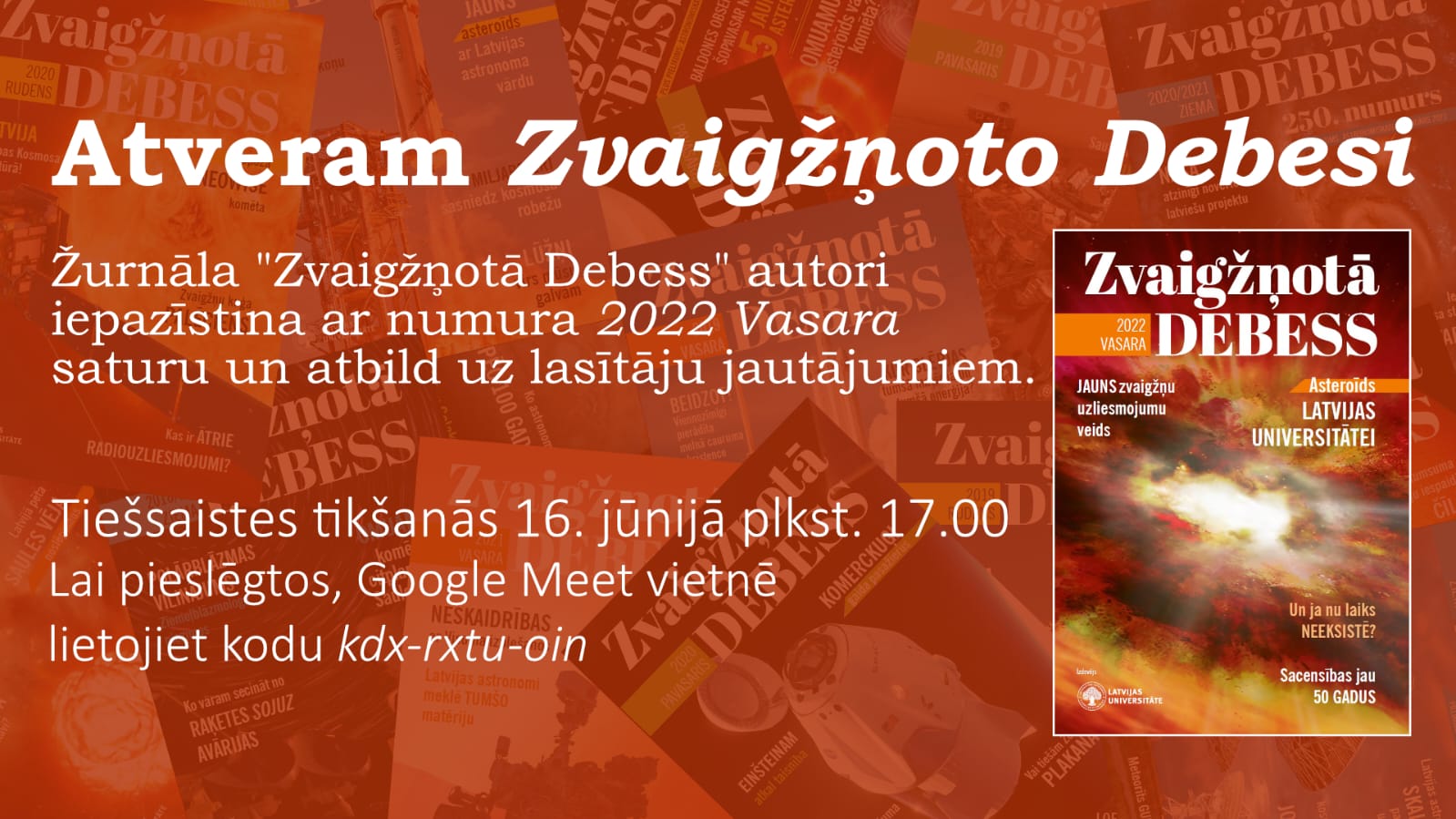
 Novērots spožs bolīds 2022-01-18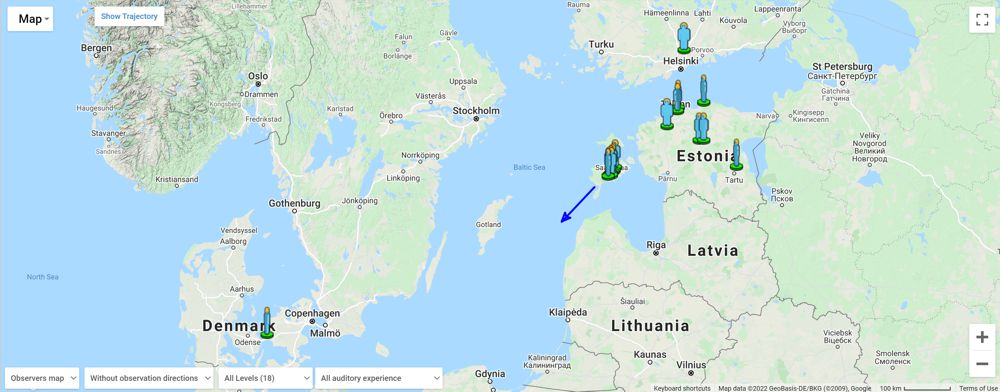
 Varbūt esiet notikuma aculiecinieks, varbūt variet pārbaudīt savus video reģistratorus ap 2022-01-18 07:35 (05:35 UT) ± 3 min?
 Īpašs kolekcijas papildinājums

 TV
TV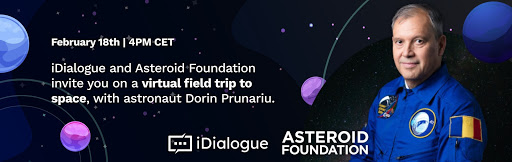





 lsm.lv